







MEN'S HEALTH ADVERTORIAL — SPECIAL EDITION UNITED KINGDOM

⭐⭐⭐⭐⭐ 4.9/5 — Over 50,000 men reviewed · Trustpilot Verified

Doctor says: The reason you can't get hard has nothing to do with your penis. Here's how to fix it at home.

Back by Research From:

Before you read on, I want to plant one idea in your mind:

What I am about to explain changes everything you have been told about erectile dysfunction — and it has to do with one specific nerve that conventional medicine has overlooked for decades.

A nerve that, in most men, is not destroyed. It is silenced. And silenced nerves respond to stimulation.

Keep that in mind. It will make complete sense within the next few paragraphs.

There is a moment no man ever forgets.

It does not matter when it first happened.

It does not matter whether it was two years ago or two months ago.

The memory is etched with the precision of a scar.

You were with her.

The desire was there — real, present, impossible to ignore.

And then came the silence.

Your body did not respond.

Or it responded halfway.

Or it started and stopped.

And in the space of three seconds, a thought crossed your mind that no man wants to admit out loud:

“It’s over. I’m not a man any more.”

That thought is the most destructive one that exists.

Because it does not just kill the erection — it kills the confidence, it kills the pleasure of waking up in the morning, it kills the way you look at her and at yourself.

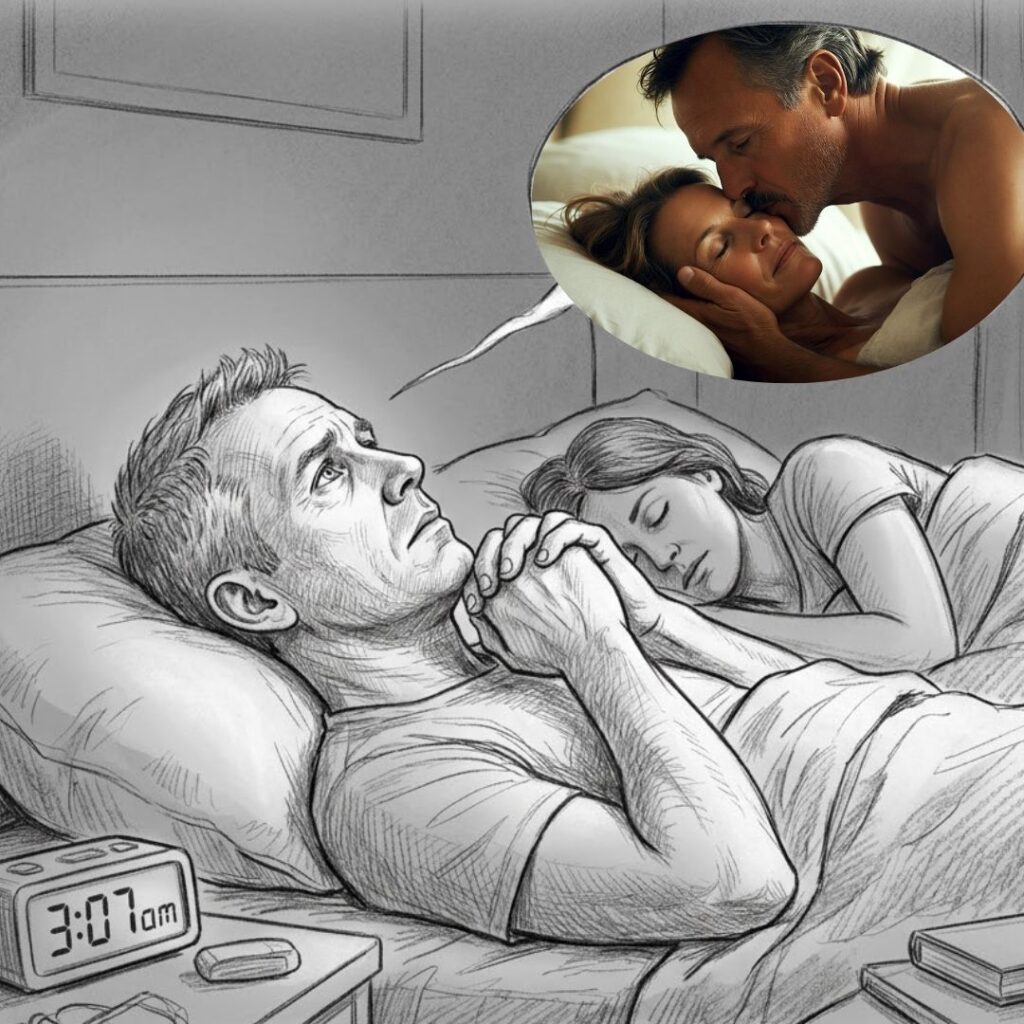
I know men who stop sleeping in the same bed as their wife.

Who avoid any physical contact whatsoever.

Who start making excuses.

Who convince themselves that “I don’t need that any more” — when the truth is they need it more than ever and are terrified of failing again.

If this sounds familiar, I want you to know two things before you continue:

First:

You are not alone.

More than 52% of British men over the age of 55 face exactly this.

The vast majority never speak to anyone about it.

Second:

The problem is not your penis.

It never was.

The problem is a nerve signal that has stopped arriving correctly — and that, contrary to what you have been told, has a concrete solution.

The Neurologist Who Refused to Accept "It's Normal at Your Age"

Dr. Thomas Calloway.

Clinical neurologist. 24 years of practice.

Associate Professor in the Department of Clinical Neuroscience at the University of Newcastle.

He is not a television personality.

He does not appear in advertisements.

He is a man who spent over two decades studying a question that conventional medicine rarely asks:

"Why do men with normal cardiovascular health, testosterone within reference values, and no diagnosed pathology continue to lose erectile function progressively?"

The answer he found was not in urology textbooks.

It was in peripheral neurology — the science of the fine nerves that connect the brain to the organs.

In 2017, analysing biopsies and nerve conduction studies from 631 patients with erectile dysfunction, Calloway identified a pattern that nobody had systematically documented: in 78% of cases, the root cause was neither vascular nor hormonal.

It was neural. Specifically: a progressive deterioration of conduction in the cavernous nerves — the nerves that translate desire into physical rigidity.

Those nerves were not dead.

They were not destroyed. They were, in Calloway’s own words:

"Silenced by overload. Like a blown fuse. The circuit exists, the current exists, but the connection is broken. And nobody was trying to reset the fuse — everyone was trying to force more current through the broken wire."

How an Erection Actually Works — The Truth Your GP Never Had Time to Explain

Let us keep this simple. Because simple is what works.

When you feel sexual desire, your brain generates an electrical impulse.

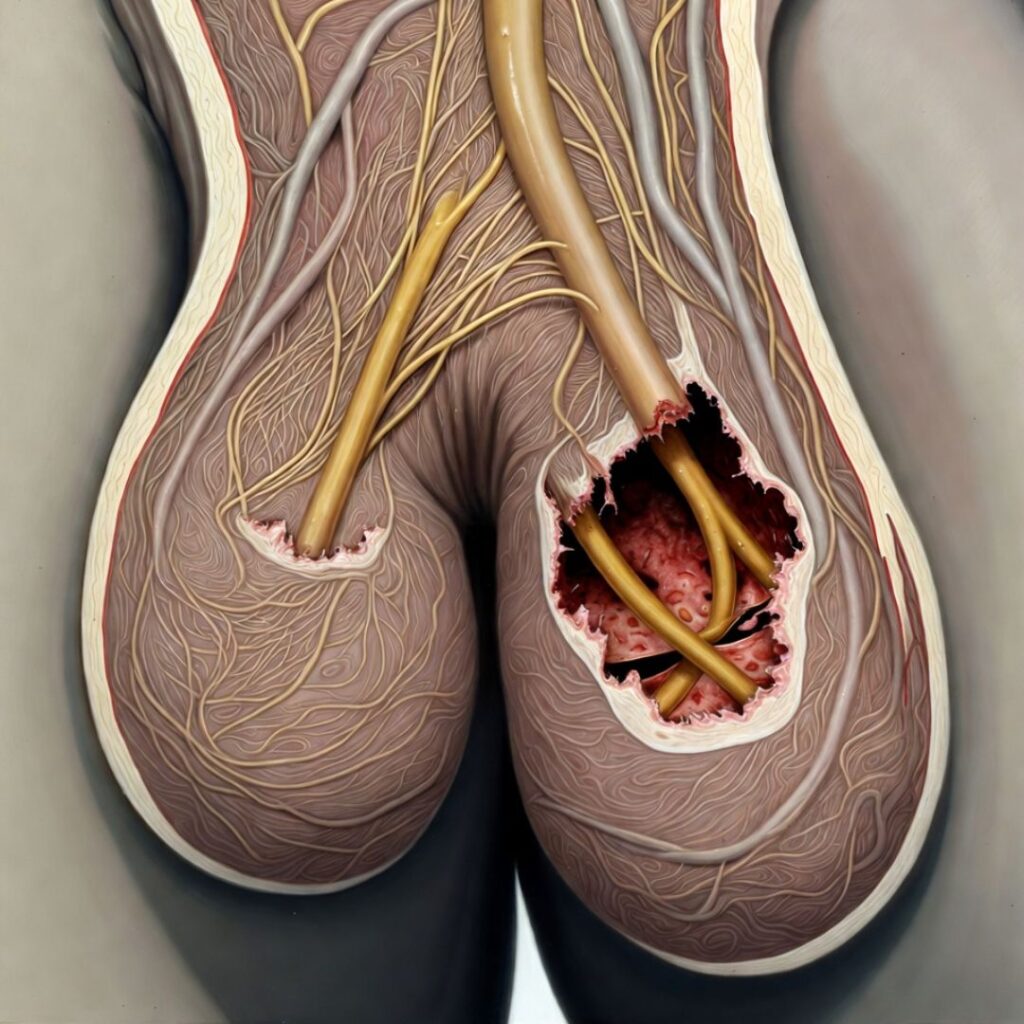
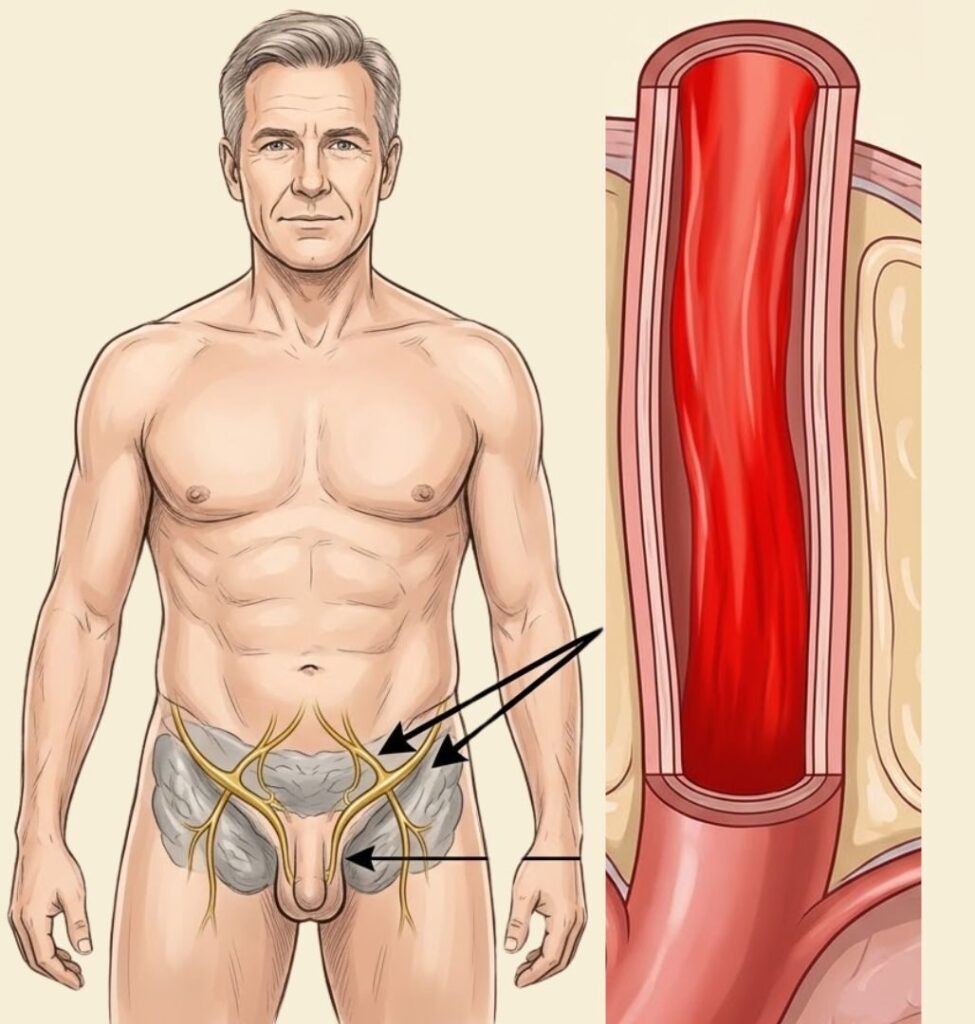
That impulse travels down the spinal cord, enters the pelvic region, and reaches a specific group of nerves that neurologists call the cavernous nerves.

These nerves release a compound called nitric oxide directly into the walls of the blood vessels in the penis.

The nitric oxide relaxes those walls, the vessels dilate, blood flows in at volume and creates the pressure that maintains rigidity.

This process has a clinical name: the neurovascular reflex response.

And it has one critical failure point: if the nerve does not fire correctly, there is no nitric oxide.

No nitric oxide means no dilation.

No dilation means no erection.

Do you see now why half the pills you have tried did not work?

Or worked once and then stopped?

Viagra and Cialis act after this process — they block an enzyme that normally destroys nitric oxide. But for them to work, the nerve must first release the nitric oxide.

If the nerve does not fire, the pill has nothing to protect.

It is like guarding the flame of a candle that has already gone out.

The blood is not the problem. The signal before the blood is.

What Silences the Cavernous Nerves — See How Many of These Apply to You

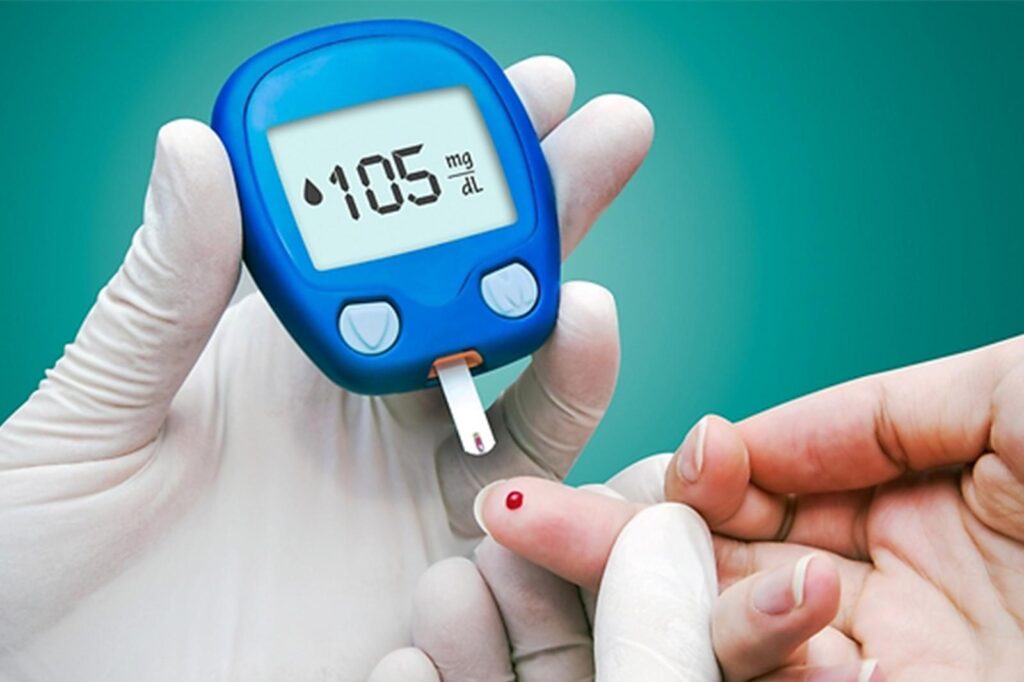
  • Type 2 diabetes or insulin resistance — elevated blood glucose directly damages the fine nerve fibres of the peripheral system
  • High blood pressure treated with beta-blockers or diuretics — both drug classes suppress pelvic nerve conduction as an undocumented side effect
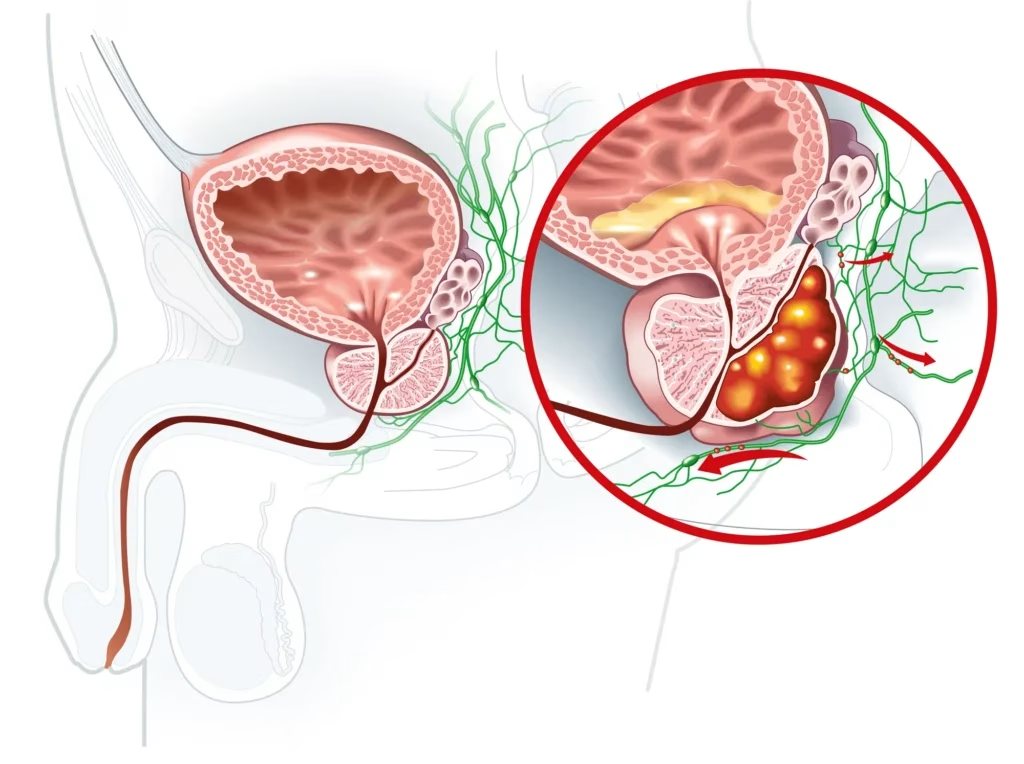
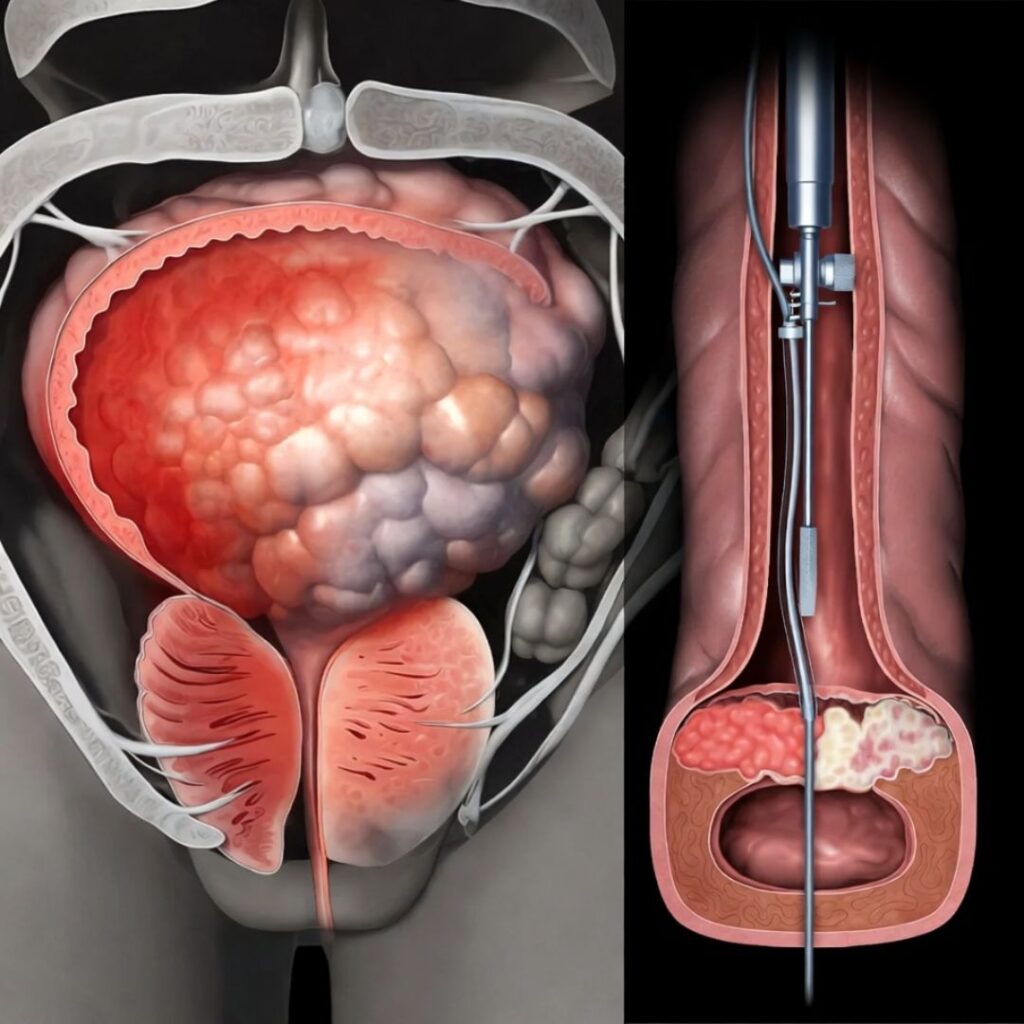
  • Prostate surgery — even “robotic nerve-sparing” techniques cause trauma to adjacent nerves that can last for years
  • Regular alcohol consumption over decades — alcoholic neuropathy preferentially affects the finest and longest nerve fibres
  • Chronic smoking — nicotine progressively constricts the vessels that supply the nerves themselves, causing localised nerve ischaemia
  • Prolonged sedentary lifestyle — pelvic nerves require regular activity to maintain efficient conduction thresholds
  • Chronic stress and elevated cortisol — suppresses the parasympathetic nervous system, which is precisely the system responsible for erection
  • SSRI/SNRI antidepressants — erectile dysfunction is the most under-reported side effect of this drug class

If you recognised two or more of these points — and most men over 55 recognise three or four — your cavernous nerves are working far below their actual capacity.

Not because they are destroyed. But because they are suppressed.

And suppressed nerves respond to stimulation.

The Newcastle Protocol — 341 Men, Results That Forced a Scientific Reassessment

In 2019, Dr. Calloway and his team initiated what would become the most cited study in erectile neurology in the United Kingdom over the past decade.

The hypothesis was simple — and radical for conventional medicine at the time:

"If the cavernous nerves are suppressed and not destroyed, a calibrated pulse stimulation protocol can restore nerve conduction without any pharmacological or surgical intervention."

The study:

  • 341 participants aged between 47 and 81 years
  • All with moderate to severe erectile dysfunction for at least 14 months
  • All without a satisfactory response to prior pharmacological treatment
  • Profiles included: diabetics, post-prostate surgery, medicated hypertensives, antidepressant users
  • No changes to medication, diet or exercise during the study

The mechanism tested:

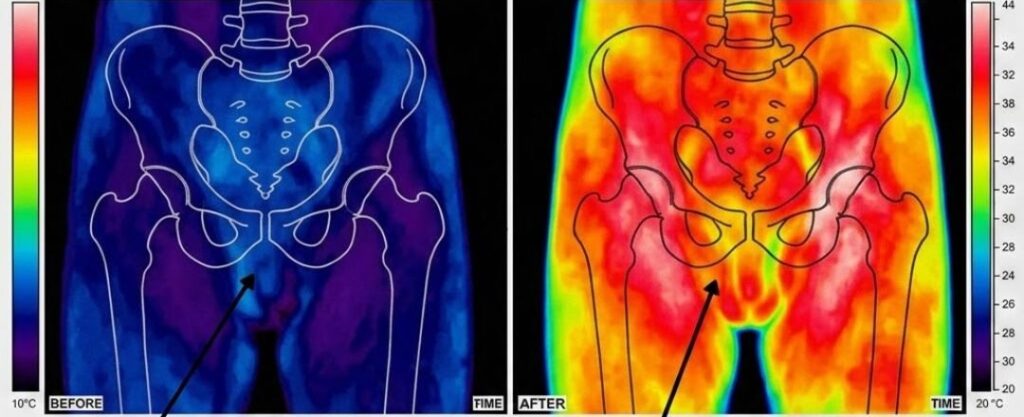
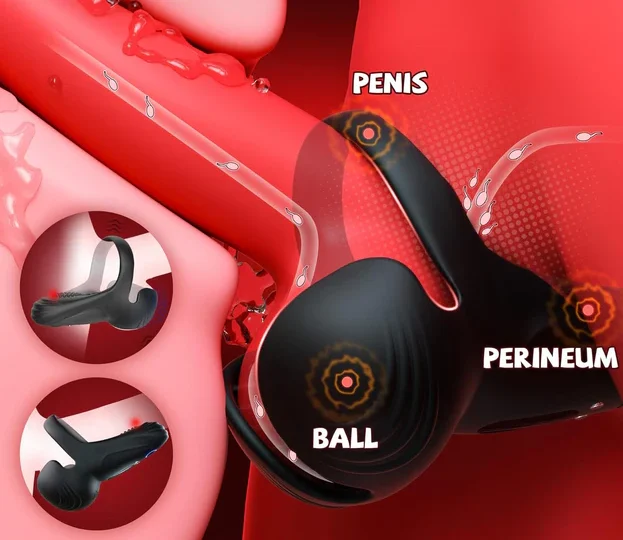
Variable low-frequency pulsed electromagnetic field (the APES protocol — Adaptive Pulse Electromagnetic Stimulation), applied directly to the perineal region and base of the penis during 12-minute sessions.

The pulse penetrates tissue layers and acts directly on the cavernous nerve fibres, without affecting surrounding tissue.

Unlike generic physiotherapy equipment, the APES protocol was calibrated specifically for the resistance and conductivity profile of cavernous nerve fibres — which are type C fibres, fine, unmyelinated, with a distinct activation threshold.

Results after 4 weeks:

87%

felt increased sensitivity within the first 6 days

71%

recovered spontaneous morning erections before day 14

78%

achieved complete and satisfactory intercourse before completing 30 days

91%

reported significantly more intense orgasms than in previous years

96%

reported improvement in mood, energy and general confidence

0%

zero participants — reported serious adverse effects

What surprised even the most sceptical members of the team was the post-prostate surgery subgroup:

"We expected modest results in men with surgical nerve damage. What we observed was that those men responded to the protocol with the same success rate as the remaining participants. The nerve traumatised by surgery retained sufficient viable fibres to respond to stimulation. That changed everything we thought we knew about post-prostatectomy erectile rehabilitation."

The problem that immediately followed the study:

The laboratory equipment weighed 11 kilograms, cost £9,200, and required technical calibration before every use.

It was impossible to use at home.

Dr. Calloway spent the following eighteen months working with biomedical engineer Dr. Sarah Fenwick to achieve the impossible: miniaturise the APES protocol into a portable, silent, factory-calibrated device that any man could use without any technical knowledge.

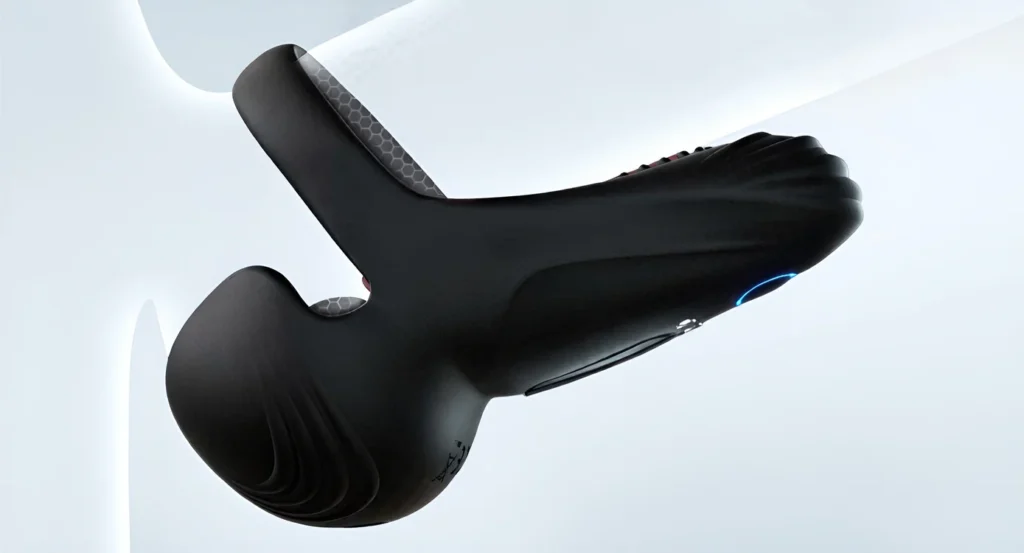
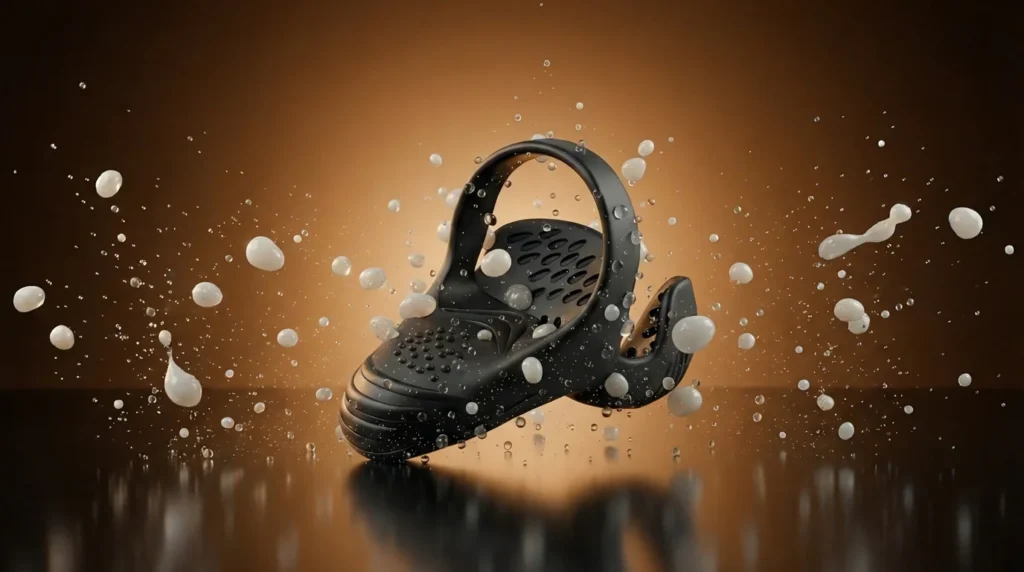
The result is called PulseRise™.

PulseRise™

PulseRise™ is not a vacuum pump.

It is not a generic stimulator.

It is not a massage device with a scientific name stuck on it.

It is the only home-use device that applies the APES protocol — the same protocol tested on 341 men in the Newcastle study — with genuine clinical precision.

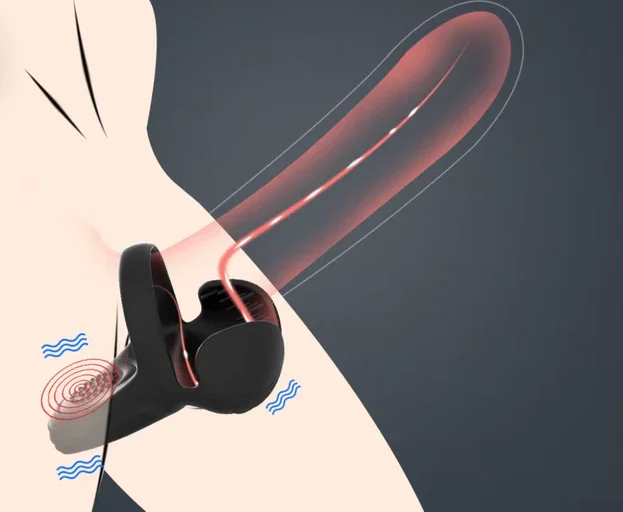
Phase 1 — The pulse reaches the nerve:

PulseRise™ emits a pulsed low-frequency electromagnetic field (2Hz to 85Hz, adaptive per session) that penetrates directly into the cavernous nerve fibres.

It is not superficial.

It does not act on the muscle.

It acts on the nerve.

Phase 2 — The nerve awakens:

The repeated stimulation triggers what neuroscience calls “long-term potentiation” — the nerve begins to fire with greater force and consistency after each session.

The activation threshold lowers.

The signal starts arriving where it was previously blocked.

Phase 3 — Your body does the rest:

With the nerve firing correctly, nitric oxide is released, vessels dilate, blood flows in — and the erection happens.

Not forced by external chemistry.

Triggered by your own biology, which never actually forgot how it is done.

It was simply waiting for the right signal.

And the orgasms?

The cavernous nerves do not just control erection — they also control the intensity of orgasm.

When those nerves return to full capacity, the orgasmic experience shifts in ways that users consistently describe as “I haven’t felt like this since my forties”.

More intense.

More complete.

More real.

This is not a bonus.

It is direct neurology: more active nerves produce a richer sensory experience.

What Happened When 50,000 Men Used PulseRise™

Before its UK launch, PulseRise™ was distributed in the United States, Canada, Australia and Germany through an early access programme.

Over 50,000 men.

Aged between 47 and 83.

With completely different medical histories.

With varying degrees of scepticism — many of whom had tried everything and were ready to give up entirely.

What the early access programme revealed was this:

PulseRise™ has no exceptions.

It worked for the 74-year-old who had undergone radical prostatectomy five years earlier and was convinced that “that chapter of life was over”.

It worked for the type 2 diabetic taking metformin and insulin who had been unable to maintain an erection for three years.

It worked for the man taking atenolol for his blood pressure who believed the tablet was what was preventing him from functioning.

It worked for the 81-year-old man, who wrote to us simply to say:

“I expected nothing. I received everything.”

Why does it work for all of them?

Because the mechanism is universal.

Regardless of the cause that silenced the nerves — diabetes, surgery, medication, years of stress — the nerve still has viable fibres.

And viable fibres respond to stimulation.

It is biology, not magic.

Raymond K.
aged 64 · Leeds

“Before the surgery, my wife and I had an active intimate life.

After the prostatectomy, that part of me simply disappeared.

Four years trying tablets that did nothing, private consultations that cost over £1,800, surgeons telling me the nerves were preserved while in practice there was nothing there.

I had started to accept it was over.

On the thirteenth day with PulseRise™, I woke up with a morning erection for the first time in four years.

I am not ashamed to say my eyes filled up.

My wife cried as well.

It was not just the sex that came back — it was the way we looked at each other in the morning.”

Peter H.
aged 69 · Birmingham

“For two years I convinced myself it was just an expected complication of diabetes.

My GP said exactly that — and I believed him.

What I did not know was that there was a specific mechanism behind it, a nerve that had simply stopped receiving the signal.

Three weeks after starting with PulseRise™, my wife asked me what I had done differently.

I did not need to explain very much.

She understood immediately.”

Malcolm T.
aged 71 · Manchester

“I have been taking beta-blockers for my heart for seven years.

Nobody ever told me that affected the nerves.

When I read Dr. Calloway’s explanation, everything suddenly made sense.

I used PulseRise™ for three weeks and the difference was so clear that I rang my son to tell him about it.

is going to order one as well.”

Colin W.
aged 57 · Glasgow

“I was completely sceptical.

I thought it was just another product with a fancy name and zero results.

I only bought it because the guarantee was 90 days and I had nothing to lose.

By day 9 I realised I had something different in my hands.

By day 21, my life had changed.”

Arthur B.
aged 79 · Bristol

“I am 79 years old.

I can write this testimonial in just four words: it genuinely works for me.”

If you take heart medication:

PulseRise™ does not enter the bloodstream.

It has no pharmacological interaction with any class of cardiac medication — beta-blockers, statins, anticoagulants, diuretics, nitrates.

The pulsed electromagnetic field acts exclusively on local nerve tissue. You can use it with complete safety.

If you have had prostate surgery:

Prostatic surgery is the most common cause of severe erectile dysfunction in men under 70.

The APES protocol was tested specifically in this subgroup in the Newcastle study — with the same success rate as the remaining participants.

Surgical trauma does not destroy nerves; it damages them.

And damaged nerves respond to the right stimulus.

If you have diabetes:

Diabetic neuropathy affects exactly the nerve fibres that PulseRise™ stimulates.

The device is compatible with metformin, insulin, sulphonylureas, and all standard type 2 diabetes medication.

More than 11,000 of the 50,000 users in the early access programme were diabetic.

If you are over 70, 75, or 80:

Neuroplasticity — the nerve’s capacity to adapt and respond to stimulation — exists into very advanced age.

In the Newcastle study, participants over 70 showed response rates comparable to the younger group.

Age is not the barrier.

The state of the nerves is.

And nerves respond.

If you have tried everything and are about to give up:

This is precisely the man for whom PulseRise™ was created.

Not the man with a mild problem that anything can solve.

The man who has tried the pills, attended private consultations, spent money, become frustrated — and is still searching because he has not accepted that it is “over”.

That man is right not to accept it.

And now he has the right tool.

Who should not use it:

✗  Men with an active implanted pacemaker or defibrillator

✗  Men with open wounds in the pelvic region

✗  Men undergoing active treatment for pelvic cancer

For everyone else — regardless of medication, surgery, age or medical history — PulseRise™ is safe for daily use.

Why This Is About More Than Sex — It Is the Core of Who You Are

I am going to say what everyone thinks but nobody says out loud:

For a man, sex is not an optional extra.

It is not a pleasure you can simply set aside when life becomes more complicated.

Sex is structural. It is part of the fabric of who you are.

Not for cultural reasons.

For biological ones.

The male nervous system is built around sexuality in a way that differs from the female.

Testosterone, orgasms, regular sexual activity — all of it feeds mood, motivation, mental clarity, and the drive to face the day.

Science confirms what any honest man already feels:

  • Men with an active sex life have a lower incidence of clinical depression
  • Regular orgasm reduces cortisol — the stress hormone — by an average of 27%
  • Sexually active men report better sleep quality, greater daytime energy, and improved concentration
  • Frequency of sexual activity is one of the most consistent predictors of subjective wellbeing in men over 55

So when the erection fails, it is not just sex that disappears.

It is the energy to wake up in the morning with purpose.

It is the way you walk into a room.

It is the confidence to reach the end of the day feeling you still have strength.

When PulseRise™ restores nerve function and the erection returns — you are not just recovering sex. You are recovering the man you were. And still are.

"I've Been Let Down Before. Why Should I Trust This?"

You deserve a straight answer. Here it is:

What a fraudulent product does:

  Uses scientific language without citing verifiable researchers, institutions or protocols

  Guarantees results within days with no basis in real studies

✗  Does not specify precisely how the product works or what its mechanism is

  Has a guarantee with small-print conditions that make returning it practically impossible

  Uses generic stock photography and testimonials with no location or detail

What PulseRise™ does:

  Specific mechanism: APES protocol stimulation of type C cavernous nerve fibres

  Real researcher: Dr. Thomas Calloway, University of Newcastle, study of 341 participants with documented methodology

  50,000 users with real results in four countries before the UK launch

  Compatible with cardiac medication, diabetes, and post-prostate surgery — tested in those groups

  90-day guarantee with no conditions and no mandatory product return

  No chemicals, no pharmacology, no side effects — acts exclusively on the nerve

The 90-day guarantee is the real proof.

No company selling empty promises offers a 90-day unconditional guarantee with the instruction that “you do not need to return the product”.

That is only possible when the company knows, based on real data, that the product works for the vast majority of users.

You already know enough to know this is different.

You have seen the mechanism.

You have seen the study numbers.

You have read what men like you described in their own words.

Now all that remains is knowing what this access will cost — and why the price is what it is.

The Price — And the Honest Reason It Is What It Is

What it would cost to address this through conventional channels in the UK:

  • Private urology consultation in London: £200 to £350 for the initial assessment alone
  • Low-intensity shockwave therapy protocol at a private clinic: £1,200 to £3,000
  • PDE5 inhibitors on an ongoing basis (Viagra/Cialis): £50 to £120 per month, indefinitely — and without treating the cause
  • Hormone replacement therapy with monitoring: £800 to £1,400 per year

Average cost of the “conventional route” over the first two years: above £2,500 — without addressing the nerve, without solving the problem at its root.

When PulseRise™ moved from the laboratory to production, the distribution team proposed £197.

After seeing the early access programme results, they suggested £147 “as a minimum, to convey genuine value”.

Dr. Calloway refused both proposals.

His position was this:

"I spent 24 years watching men lose years of their lives because they could not access adequate treatment — not because the treatment did not exist, but because they could not afford it. I am not going to create the right solution and then make it inaccessible to the man who needs it most."

The final decision was guided by a simple logic: the UK market launch needs volume and results documented at scale.

The more men who use PulseRise™ at this stage, the stronger the evidence becomes for the planned European expansion.

For this reason, during this launch phase, PulseRise™ is available for:

£39

thirty-nine pounds · free delivery across the United Kingdom

(less than two months of tablets — which treat the symptom and ignore the cause)

⚠  IMPORTANT: This price is tied to the current UK production batch. When that batch runs out — and at the current rate of orders, that is days away, not weeks — the price moves to £89. There is no scheduled date for the £39 price to return. If you are reading this page with the price still at £39, the batch is still available for your region.

90 days. No conditions. No questions. No mandatory product return.

Here is how it works:

You receive PulseRise™.

You use it for 90 days according to the included protocol — 12 minutes per day.

If at the end of those 90 days there is no:

✓  Clearly firmer and more consistent erections

✓  Return of spontaneous erections, including morning ones

✓  Visible increase in sensitivity and intensity

✓  Richer, more complete orgasms than in recent years

✓  Improvement in confidence, mood and general wellbeing

Send an email.

Receive 100% of your money back the same day.

No form.

No discussion.

No need to explain anything.

No returning the device.

We take the loss.

You keep the product and the money.

This is real zero-risk — not the version with an asterisk at the bottom of the page.

We can offer this because we know, based on 50,000 real users, what this device does. The risk of a return request is residual. And when it happens, we pay without question — because that is the agreement we made and because it is fair.

What You Receive — In Completely Discreet Packaging

  1 PulseRise™ Device (8 intensity levels, USB-C charging)

  1 Discreet carrying case — plain black, no logos, no external text

  1 USB-C charging cable (full charge in 80 minutes)

  1 30-Day Neural Restoration Protocol (daily step-by-step guide)

  1 Safety and Usage Manual

  Lifetime email support from Dr. Calloway’s clinical team

Delivery: Completely plain packaging, no branding, no indication of contents or recognisable sender.

The bank statement does not reveal the product.

Your privacy is total — because we understand this matter is private and should remain so.

The Decision

You have reached the end.

And most men who get here already know what they want to do.

But there is always that voice that says “later”.

“Tomorrow”.

“Let me think about it”.

I know that voice.

And I know what it produces: another month identical to the last.

Another moment avoided.

Another night with your back turned in bed.

The question is not “will it work”.

The answer to that question already exists — 50,000 men have given it.

The question is: will it be now, or will you wait longer while the nerve becomes even more silenced?

£39

thirty-nine pounds · free delivery across the United Kingdom

(less than two months of tablets — which treat the symptom and ignore the cause)

✓ Free UK delivery  

✓ 100% discreet packaging  

✓ Encrypted payment

✓ No prescription required  

✓ No side effects  

✓ 90-day real guarantee

P.S. — A 76-year-old man who took part in the early access programme wrote to us with the following:

“At 76 I expected medicine to tell me it was too late. I expected to resign myself. What I did not expect was that after 18 days I would wake up with proof that I had been wrong. I should have tried this at 64. Do not make my mistake.”

Eighteen days.

Do not wait any longer than necessary to make this decision.

P.P.S. — The £39 price is not permanent.

When the current production batch runs out, the price moves to £89 without prior notice.

There is no waiting list for the old price. If you are seeing £39, you are still in time.

P.P.P.S. — If you take heart medication, diabetes medication, or have had prostate surgery — this device was developed precisely for you.

No side effects.

No interaction with any medication.

It acts on the nerve, not the bloodstream.

The 90-day guarantee covers you completely.

Company & Contact Information

PulseRise Health Ltd.

US Operations Office:

Email: support@kronosdevice.shop

Phone: +1 (800) 555-0192  (Monday to Friday, 9am–6pm EST)

Address: PulseRise Health Inc., 1055 West 7th Street, Suite 3300, Los Angeles, CA 90017, United States

We respond to all enquiries within 4 business hours. For urgent delivery queries, please call.

Comments

Skyler G.
I bought mine for the full price last week and now it's £60 off? That's not fair!

Like · Reply · 51 min

Leonard B.
How long does shipping actually take??

Like · Reply · 1 h

Rob C.
Hey Leonard, I got mine after exactly one week.

Like · Reply · 24 min

Alfred J.
Did you buy one? How long does it take to arrive?

Like · Reply · 2 h

Rob C.
For me it was 7 business days from order to delivery

Like · Reply · 27 min

Harry K.
I've never experienced anything like it and it's absolutely amazing and worth every single penny, especially if you've already tried everything else! I've desperately needed something like this for years. Genuinely love it.

Like · Reply · 5 h

(1) https://www.health.harvard.edu/newsletter_article/Testosterone_aging_and_the_mind
(2) https://www.upi.com/Health_News/2012/06/24/Low-testosterone-not-normal-part-of-aging/21971340591160/
(3) https://joe.bioscientifica.com/view/journals/joe/217/3/R25.xml
(4) https://www.ncbi.nlm.nih.gov/pubmed/2202881
(5) https://www.ncbi.nlm.nih.gov/pmc/articles/PMC4154787/
(6) https://www.ncbi.nlm.nih.gov/pubmed/25982085
(7) https://www.ncbi.nlm.nih.gov/pmc/articles/PMC5054608/
(8) https://www.ncbi.nlm.nih.gov/pubmed/22552705
(9) https://www.ncbi.nlm.nih.gov/pmc/articles/PMC5649360/
(10) https://www.betweenusclinic.com/sex-surveys/worst-male-sexual-issue-survey/
(11) https://thriva.co/hub/womens-health/understand/how-your-hormones-affect-your-energy-levels#testosterone
(12) https://www.ncbi.nlm.nih.gov/pmc/articles/PMC4772354/
(13) https://www.webmd.com/men/what-low-testosterone-can-mean-your-health#1
(14) https://www.healthline.com/health/low-testosterone/dangerous#symptoms
(15) https://www.health.harvard.edu/mens-health/is-testosterone-therapy-safe-take-a-breath-before-you-take-the-plunge
(16) https://www.sciencedaily.com/releases/2019/07/190718123258.htm
(17) https://jamanetwork.com/journals/jama/fullarticle/2603929
(18) https://www.ncbi.nlm.nih.gov/pubmed/20592293
(19) https://www.ncbi.nlm.nih.gov/pubmed/11402256
(20) https://www.ncbi.nlm.nih.gov/pubmed/6298507
(21) https://www.ncbi.nlm.nih.gov/pmc/articles/PMC5988228/
(22) https://www.ncbi.nlm.nih.gov/pubmed/8488634
(23) https://www.sciencedirect.com/science/article/abs/pii/0093691X85901827
(24) https://www.denverpost.com/2008/02/01/rodeo-group-tests-bulls-to-prevent-beefing-up-with-steroids/
(25) https://www.ncbi.nlm.nih.gov/pubmed/1906089
(26) https://www.ncbi.nlm.nih.gov/pubmed/3009677
(27) https://www.ncbi.nlm.nih.gov/pubmed/365598
(28) https://www.sciencedirect.com/topics/neuroscience/GnlH-antagonists
(29) https://www.sciencedaily.com/releases/2009/06/090615171618.htm
(30) https://www.meghantelpner.com/blog/soy-foods-hidden-sources-health-and-environmental-impact/
(31) https://news.ncsu.edu/2008/07/new-study-shows-compounds-from-soy-affect-brain-and-reproductive-development/
(32) https://www.ncbi.nlm.nih.gov/pmc/articles/PMC2853991/
(33) https://www.npr.org/2011/03/02/134196209/study-most-plastics-leach-hormone-like-chemicals
(34) https://www.healthcmi.com/Nursing-News-and-Information/276-estrogen-exposure-found-in-store-receipts
(35) https://www.sciencedirect.com/science/article/abs/pii/S030698770600702X
(36) https://link.springer.com/referenceworkentry/10.1007%2F978-3-319-44441-3_32
(37) https://www.ncbi.nlm.nih.gov/pubmed/9758439?dopt=Abstract
(38) https://jamanetwork.com/journals/jama/fullarticle/2603929
(39) https://www.ncbi.nlm.nih.gov/pubmed/17568384
(40) https://www.ncbi.nlm.nih.gov/pmc/articles/PMC3739276/
(41) https://aip.scitation.org/doi/pdf/10.1063/1.4991216
(42) https://www.ncbi.nlm.nih.gov/pubmed/24386995
(43) https://www.webmd.com/vitamins/ai/ingredientmono-1132/eurycoma-longifolia
(44) https://hqlo.biomedcentral.com/articles/10.1186/1477-7525-1-77
(45) https://www.ncbi.nlm.nih.gov/pubmed/21671978/
(46) https://www.ncbi.nlm.nih.gov/pubmed/23754792
(47) https://onlinelibrary.wiley.com/doi/full/10.1111/and.12482
(48) https://www.ncbi.nlm.nih.gov/pubmed/20078516/
(49) https://www.ncbi.nlm.nih.gov/pmc/articles/PMC3902593/
(50) https://www.ncbi.nlm.nih.gov/pmc/articles/PMC3902593/
(51) https://examine.com/supplements/chlorophytum-borivilianum/
(52) https://examine.com/supplements/chlorophytum-borivilianum/
(53) https://ods.od.nih.gov/factsheets/Zinc-HealthProfessional/
(54) https://www.medicalnewstoday.com/articles/5702.php
(55) https://www.ncbi.nlm.nih.gov/pubmed/20446777
(56) https://www.ncbi.nlm.nih.gov/pubmed/596207
(57) https://www.ncbi.nlm.nih.gov/pubmed/21744023
(58) https://www.ncbi.nlm.nih.gov/pubmed/8875519
(59) https://www.ncbi.nlm.nih.gov/pmc/articles/PMC4623306/
(60) https://www.ncbi.nlm.nih.gov/pubmed/1619184
(61) https://www.ncbi.nlm.nih.gov/pubmed/21129941/
(62) https://www.ncbi.nlm.nih.gov/pubmed/28091641
(63) https://www.endocrine-abstracts.org/ea/0028/ea0028p313
(64) https://www.eurekalert.org/pub_releases/2007-07/pw-pw1070207.php
(65) https://www.iasj.net/iasj?func=fulltext&aId=71548
(66) https://www.ncbi.nlm.nih.gov/pmc/articles/PMC3665023/